The Story Library · Creative Work
One of a Kind. Two, If Possible.
One painting, a few different conversations.
 Michelle Lind Abstract paintings, originals and signed prints
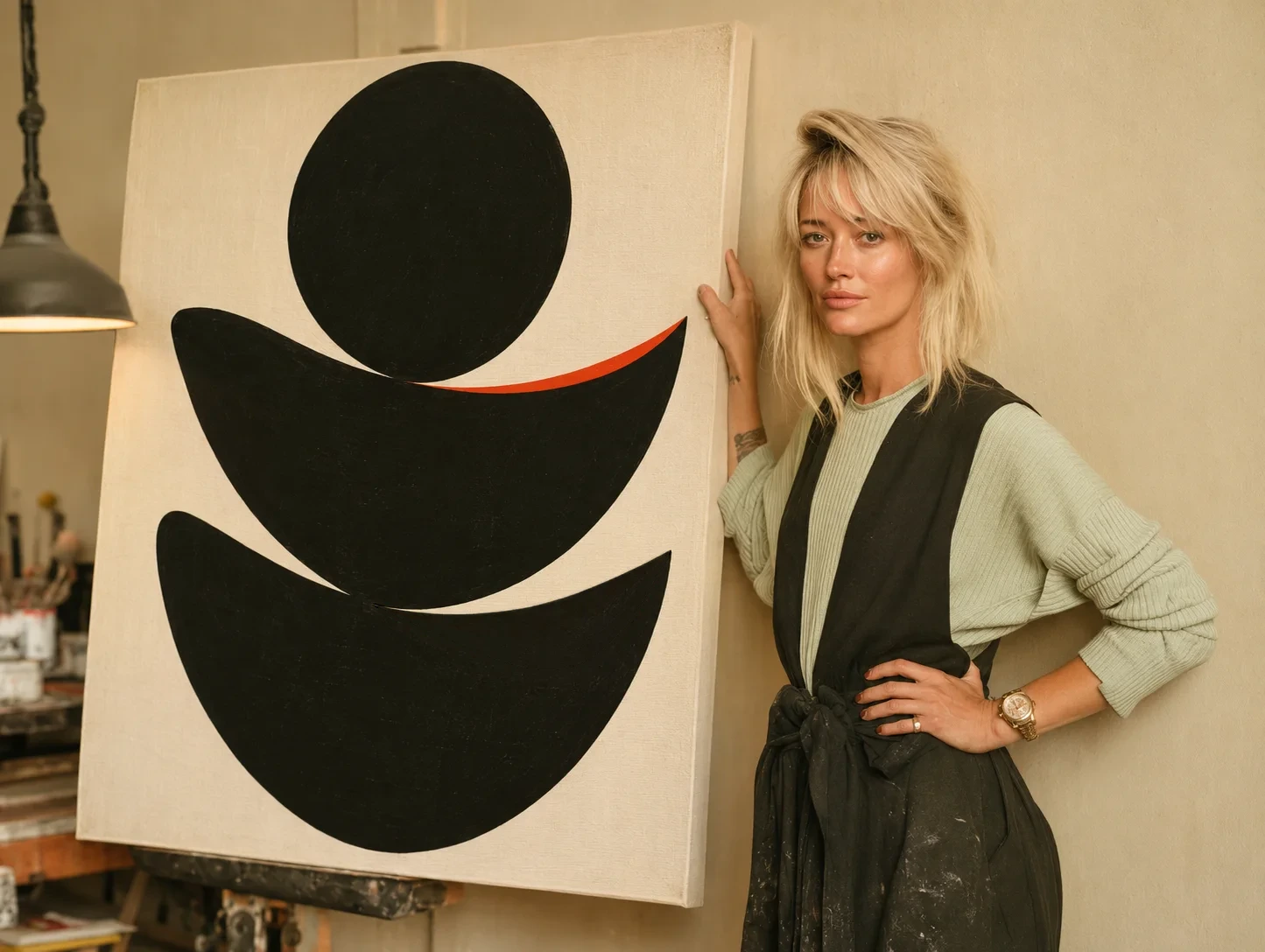
Michelle Lind spent eleven days painting Night Forms.
Three days painting the canvas. Eight deciding where a small orange mark belonged.
She moved it six times.
Eventually, she put it back where it started.
Michelle considered the painting finished.
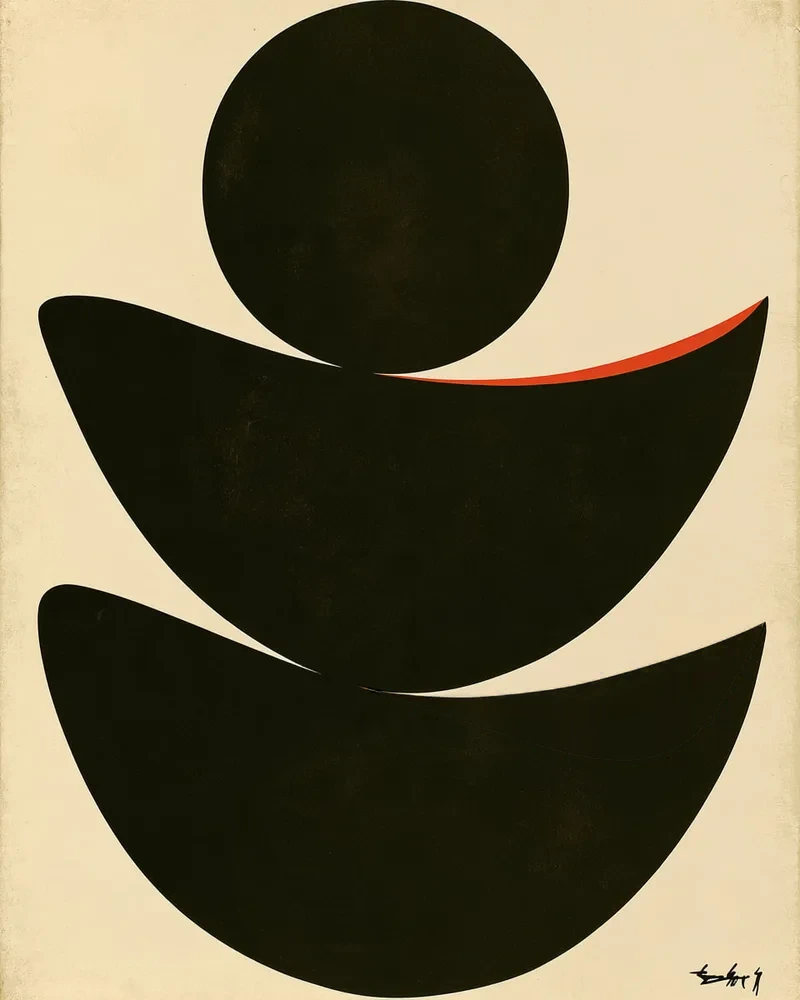
She photographed it, gave it its own page on Much Obliged, and shared the link.
Someone bought a print.
Someone else bought the original.
So far, everyone understood the arrangement.
Michelle also shared occasional studio videos. A man watched her moving the orange mark and sent five dollars to support her next painting.
"My wife says I take too long choosing paint colors," he wrote. "Thank you for making me look decisive."
A few days later, an editor named Corinne found Night Forms while looking for artwork for a book about minimalist interiors.
The book was titled Less Is More.
It was 412 pages long.
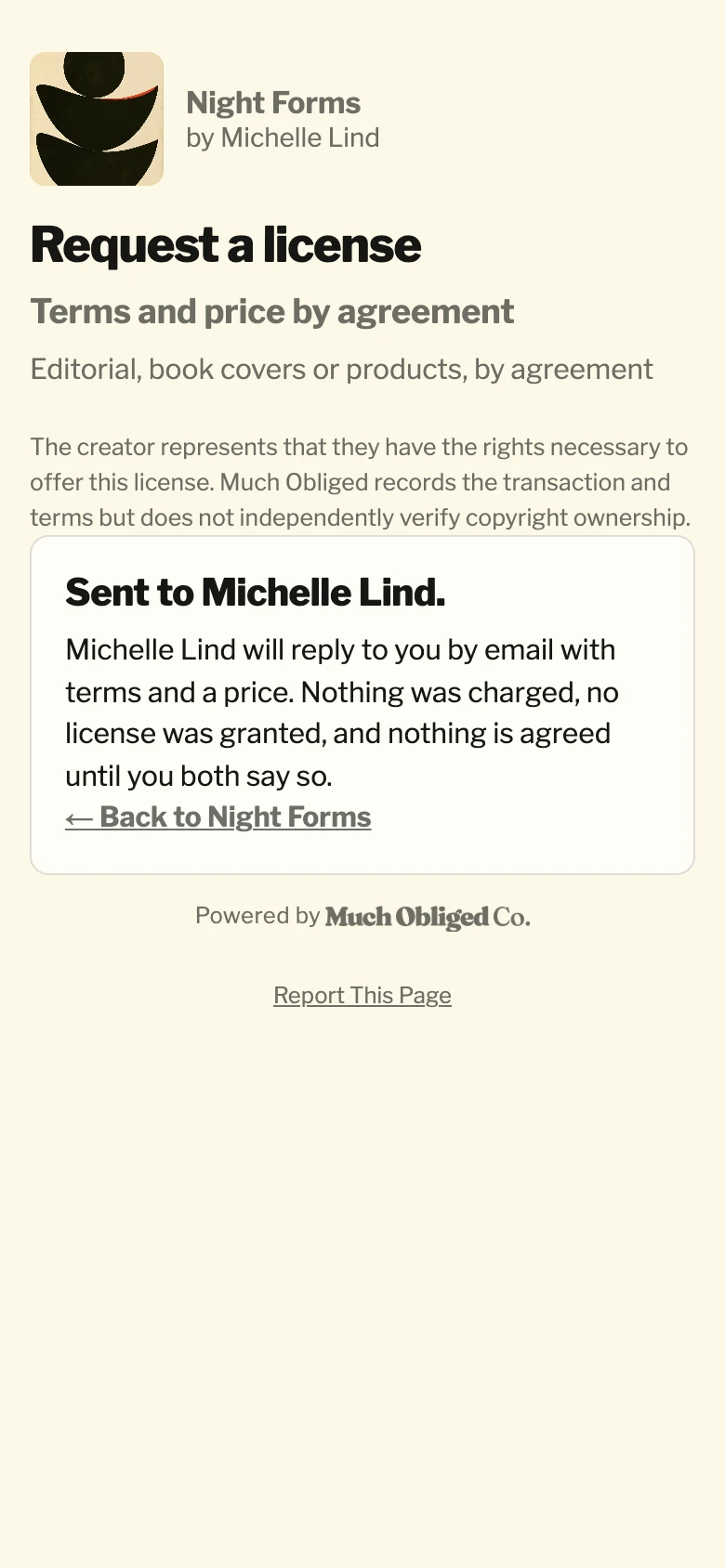
Corinne requested permission to reproduce the image, explained its intended use, and agreed on terms with Michelle.
Then she decided she wanted the painting for herself.
"Is the original still available?"
"No, I'm afraid it's sold."
"Do you have another?"
"Another painting?"
"Another original."
Michelle explained that there had only been one.
"Could you paint another exactly like it?"
"Then it would be a copy."
"What if you painted it yourself?"
Michelle had, in fact, painted the first one herself.
"Wouldn't that make it an original?"
Michelle considered how much of art history could reasonably be explained in an email.
Her artwork page could show what was available, including prints. It couldn't turn one of a kind into a two-pack.
We make software, not miracles.
But Corinne genuinely loved the painting.
Michelle asked what she loved about it.
"The quiet composition. The charcoal shapes. That ridiculous little orange mark."
She wanted something with the same feeling for a wall beside her bookshelves.
That was different.
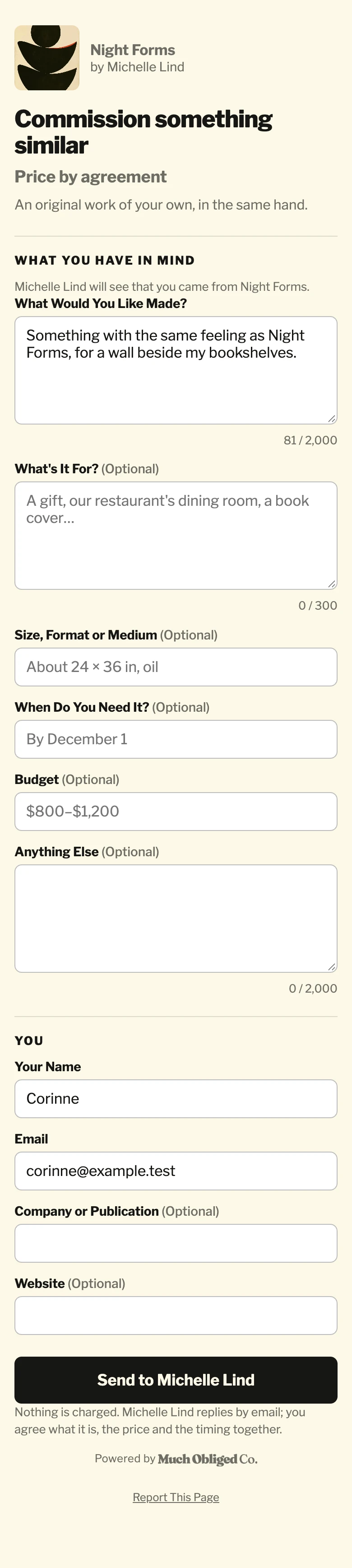
Corinne found Michelle's offer for An original work of your own and sent an inquiry.
They discussed dimensions, composition, and price. Michelle drew up a sketch, and Corinne agreed.
Several weeks later, Corinne received her painting.
It wasn't Night Forms. It was something new, made just for her.
She loved it.
She sent Michelle a photograph of the work hanging beside her bookshelves.
Then another message.
"My sister saw it and absolutely loves it. Could she get a print?"
Michelle said that could be arranged.
A few minutes passed.
Then Corinne wrote again.
"Actually, on second thought, don't."
"I think I'd like mine to be one of a kind."
The real screens behind the story
How it worked
One painting, its own page
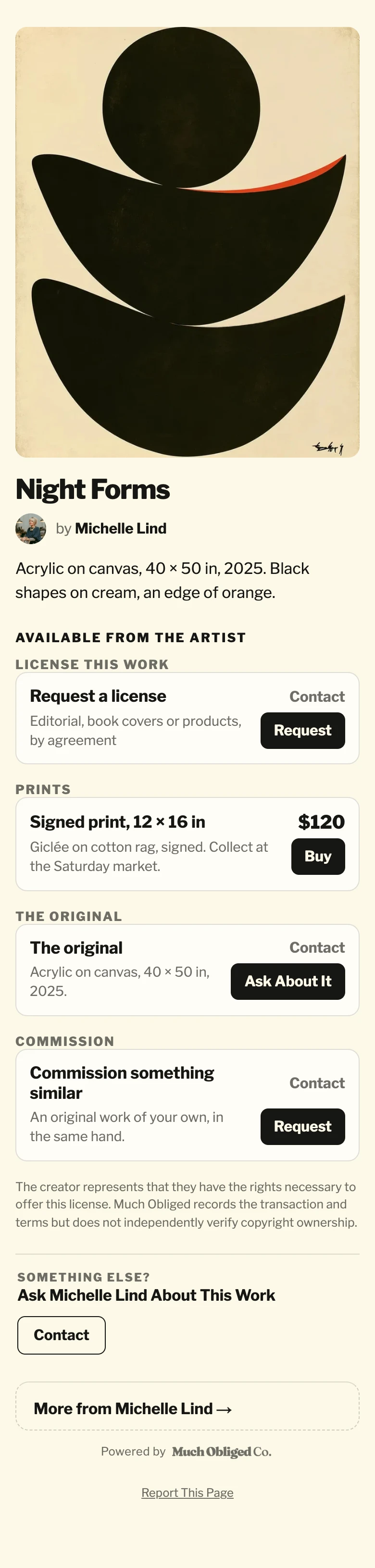
Night Forms gets a page of its own, with every way to get it in Michelle's words: a license, a signed print at $120 with a Buy button, the original, a commission.

Corinne asks for a license
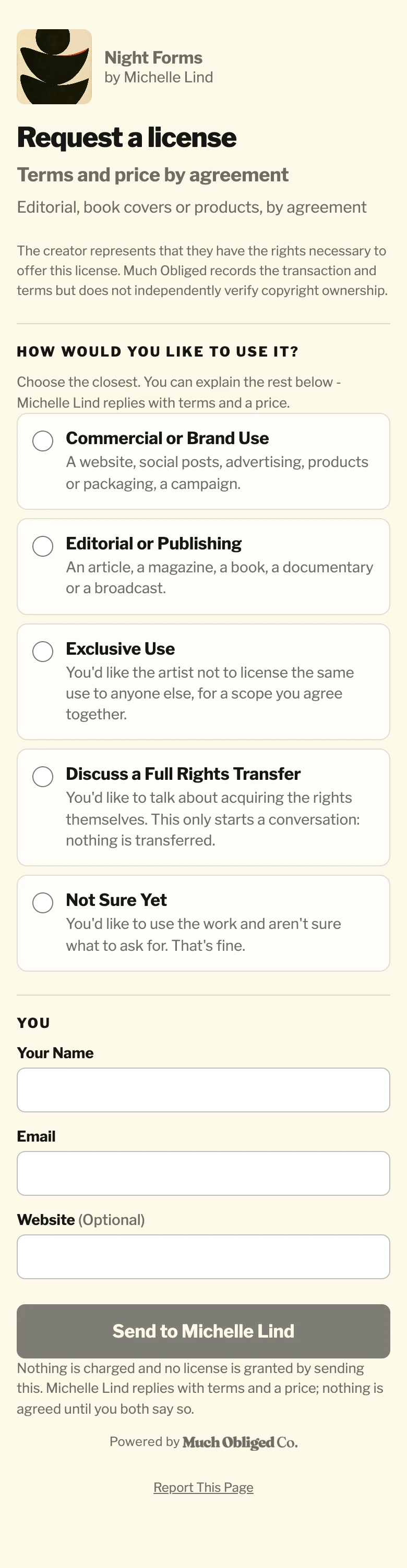
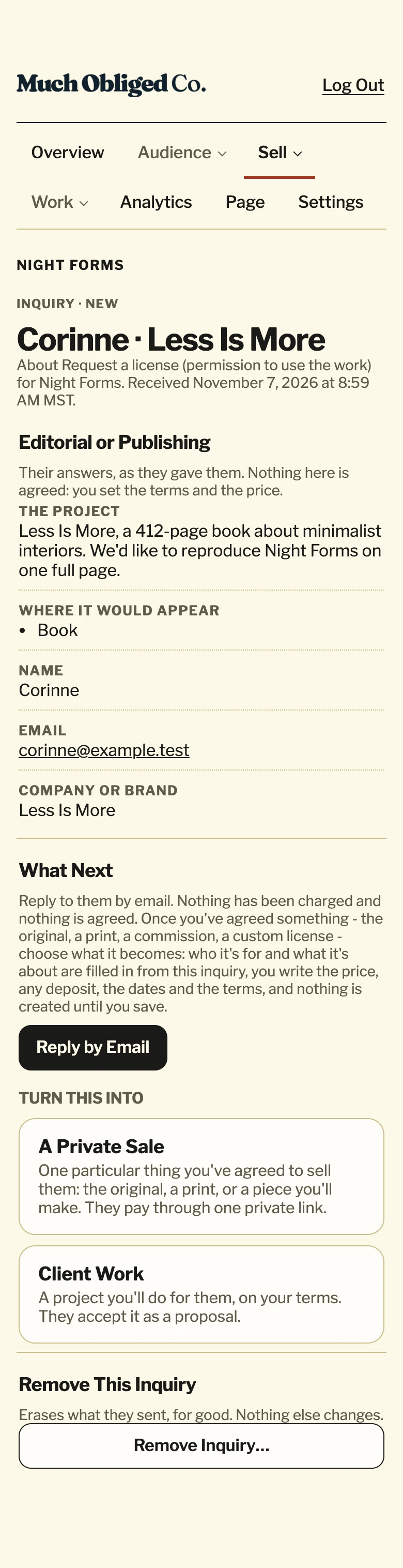
She says how she'd use it: Editorial or Publishing, a 412-page book. Sending the request charges nothing and grants nothing.
What reaches Michelle
Michelle's dashboard keeps Corinne's answers as she gave them, and says it plainly: nothing here is agreed until Michelle sets the terms and the price.
Something new
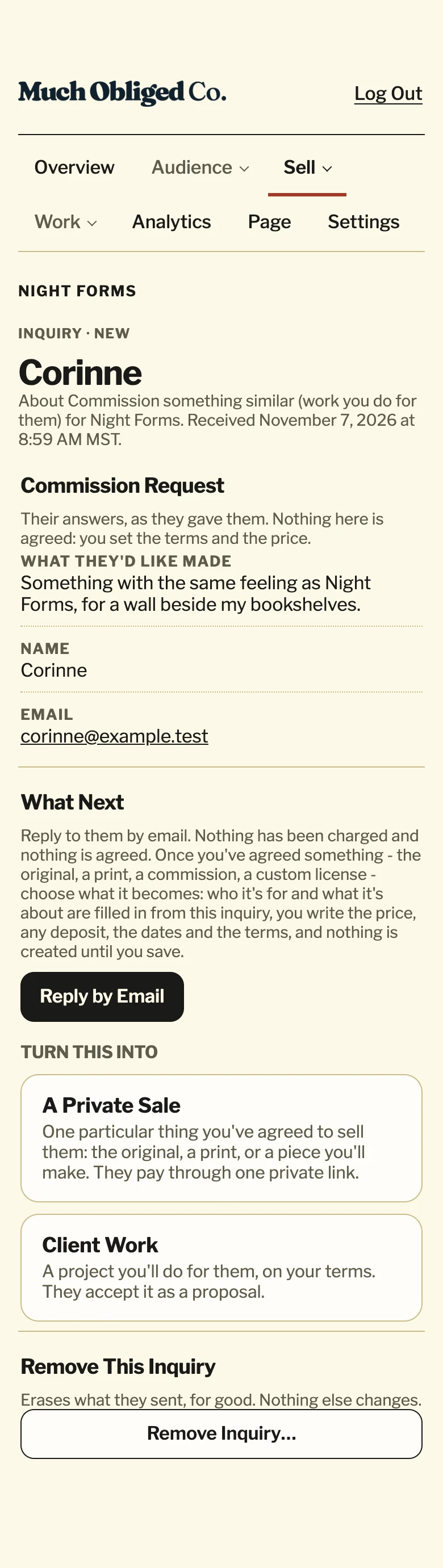
Corinne's commission request arrives the same way. Once they agree, Michelle turns it into a Private Sale: a piece she'll make, paid through one private link.
What Michelle used
Give each piece its own page.
Creative Work
One page for each piece of your work, with every way people can get it: a license, a print, the original, a commission - in your words, at your prices. Share its link wherever the work appears.
License requests
People tell you how they'd like to use the work. You reply with terms and a price; nothing is granted or charged until you agree.
Commissions
People tell you what they have in mind. You agree scope, price and terms with them afterwards.
And the five dollars? That was Support, on the same page: people can back your next piece, once or every month. How Support works
$8 a month, with a 0% Much Obliged platform fee. You can start with a free page, and add the paid tools when you're ready to accept support, sell, or manage paid work. Standard payment-processing fees are separate.