The Story Library · Counter
Eleven Minutes Late
Customers pay on their own phone. No card reader to buy.
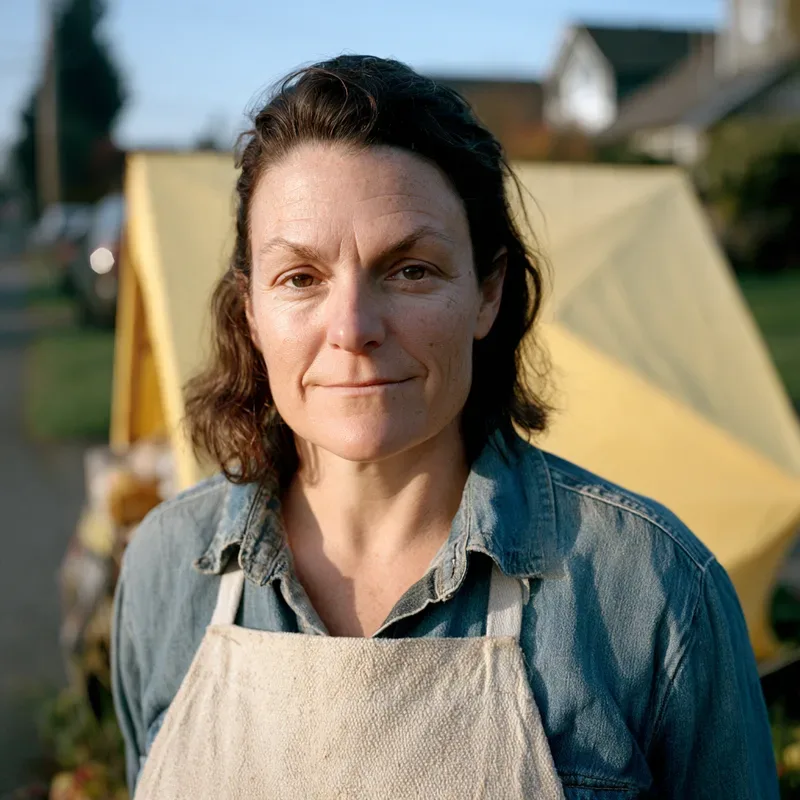 June's Bake Stand Bread, hand pies and cinnamon rolls, on Saturdays
June had been baking for twenty-three years.
Her husband once suggested she buy a timer.
June informed him she already had one.
He had never seen it. He had been married to her for thirty-one years and knew better than to ask.
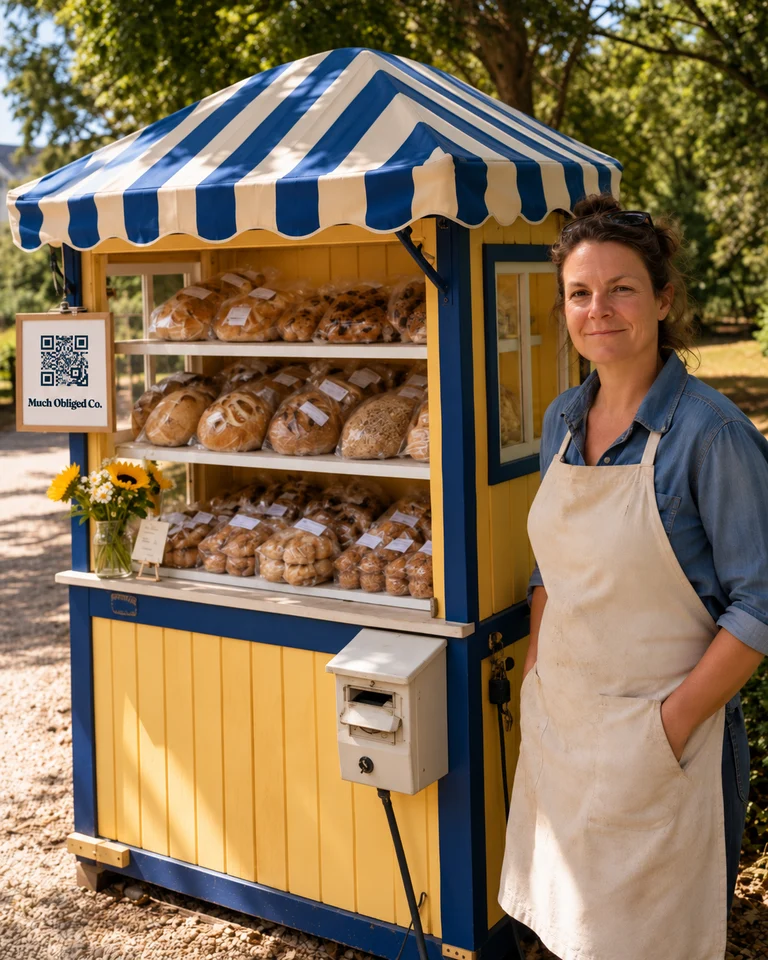
Every Saturday, June stocked the unmanned bake shack beside her house with bread, hand pies, and twenty-four cinnamon rolls.
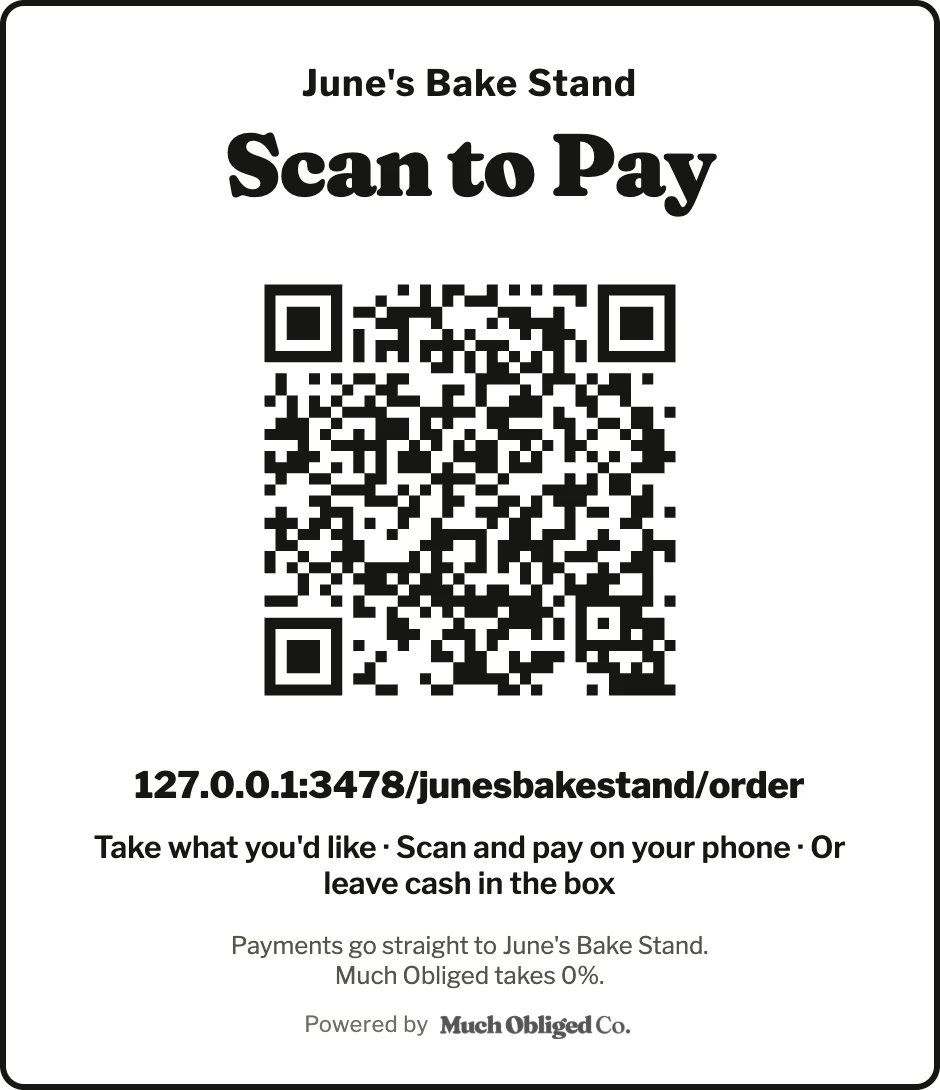
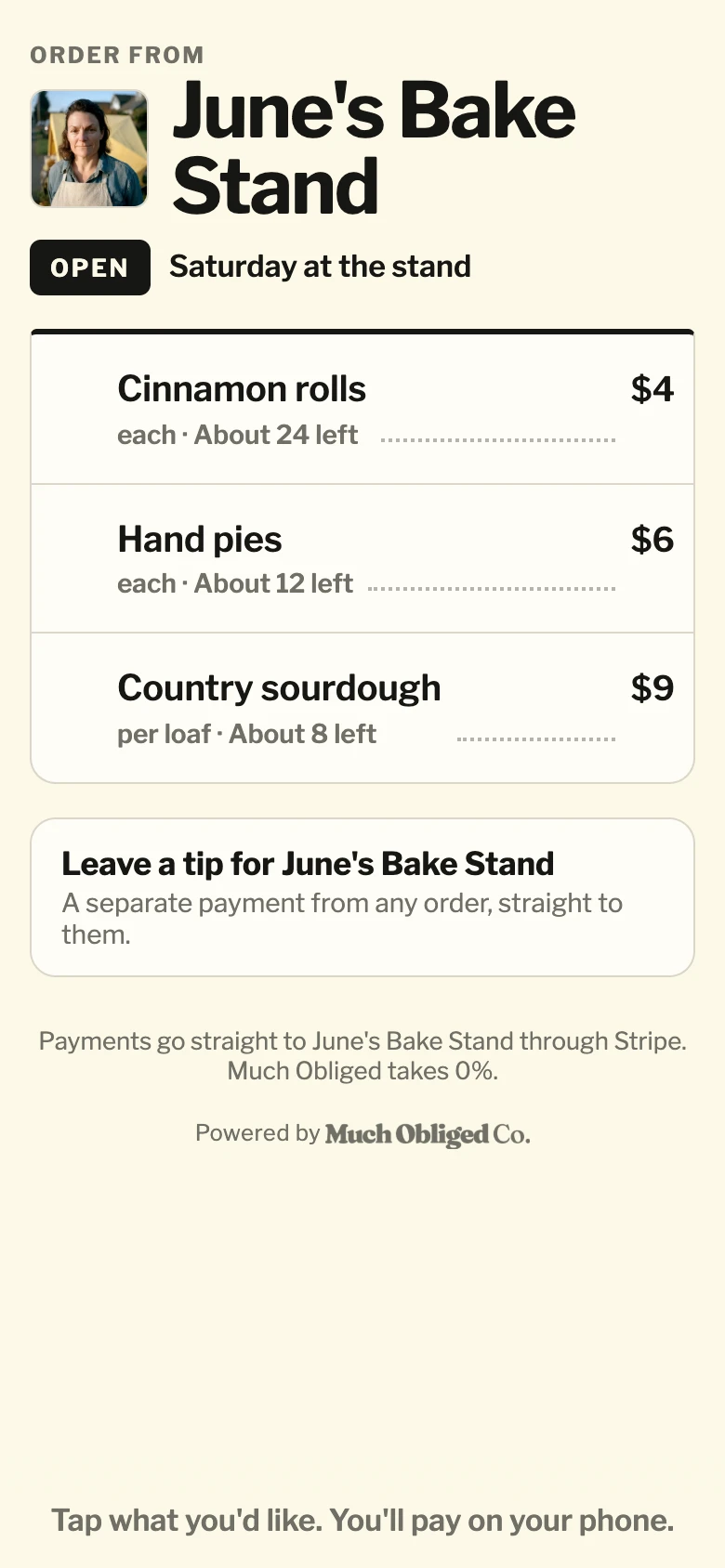
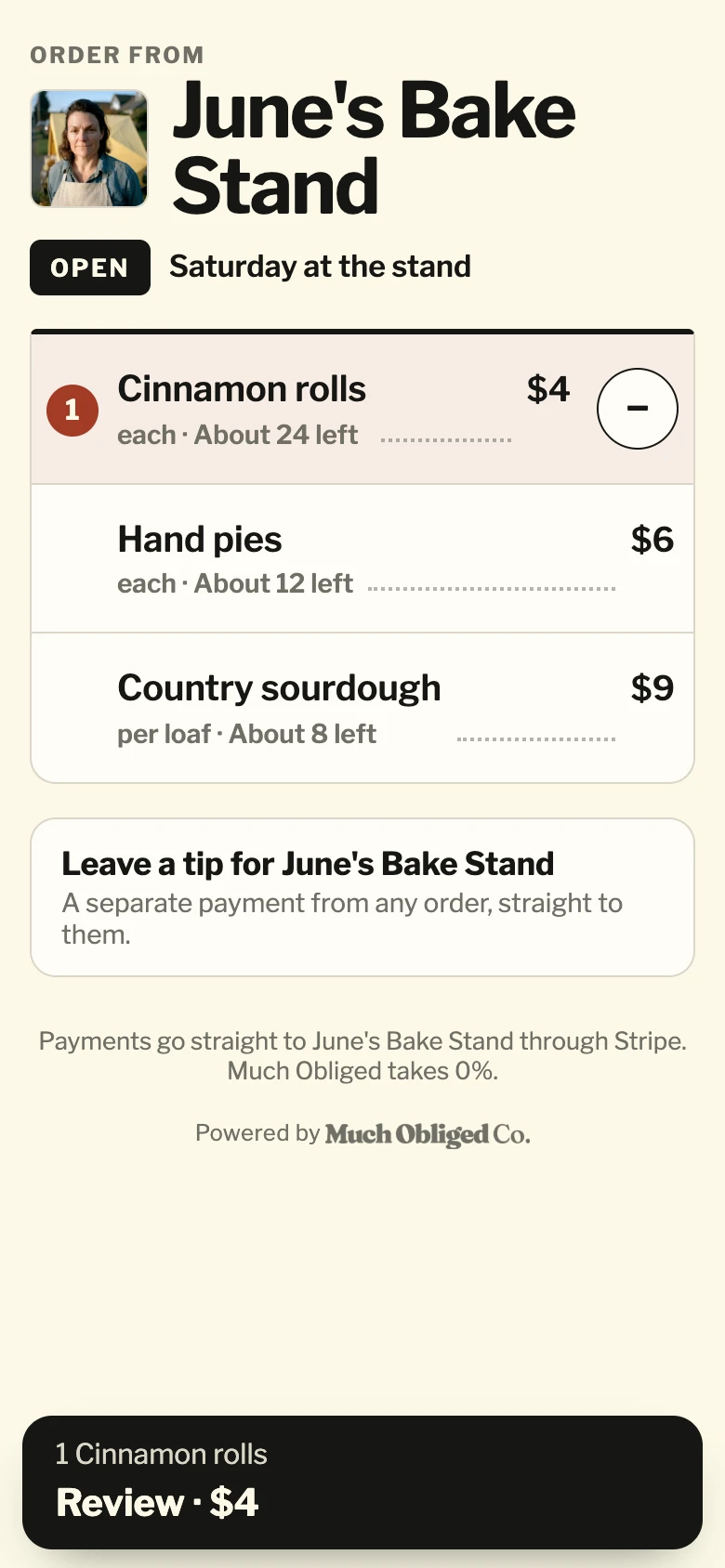
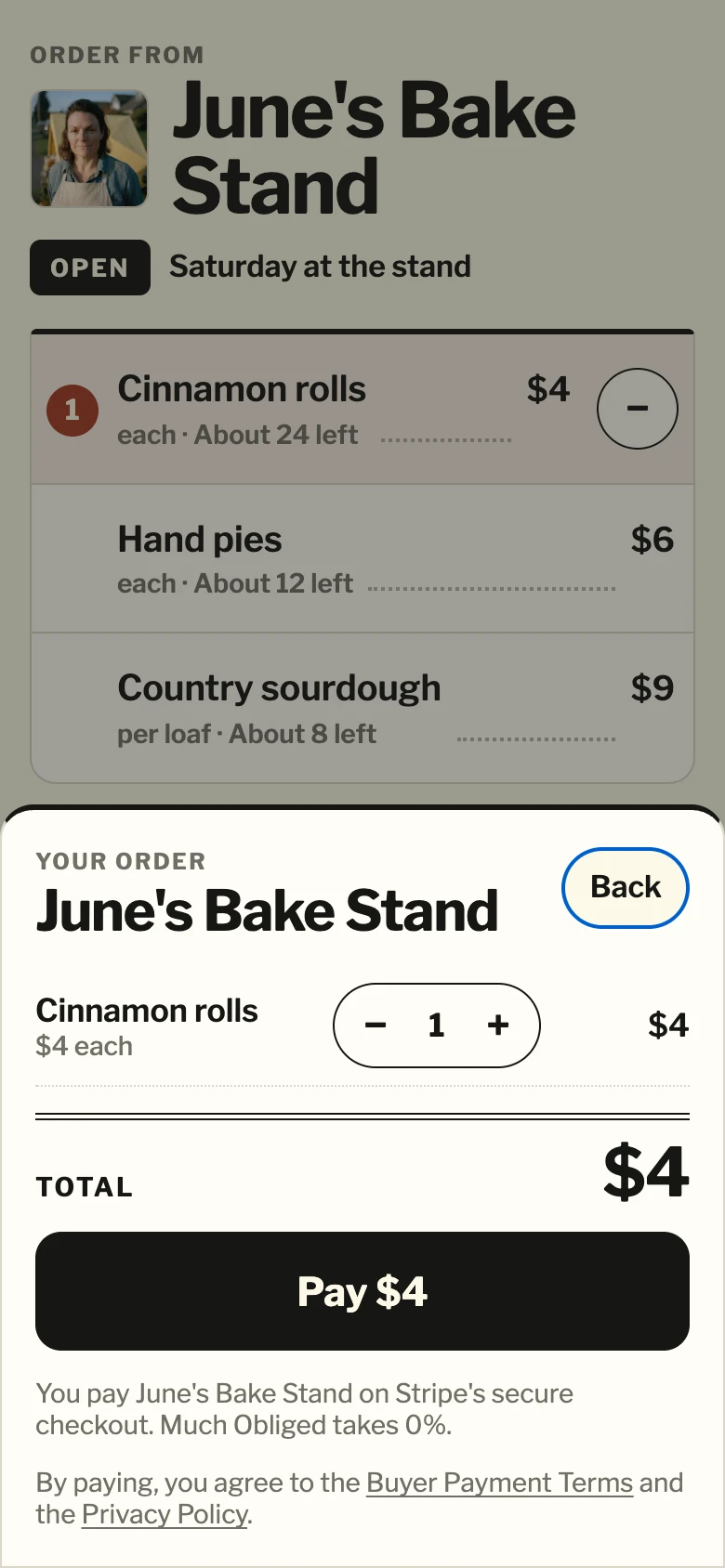
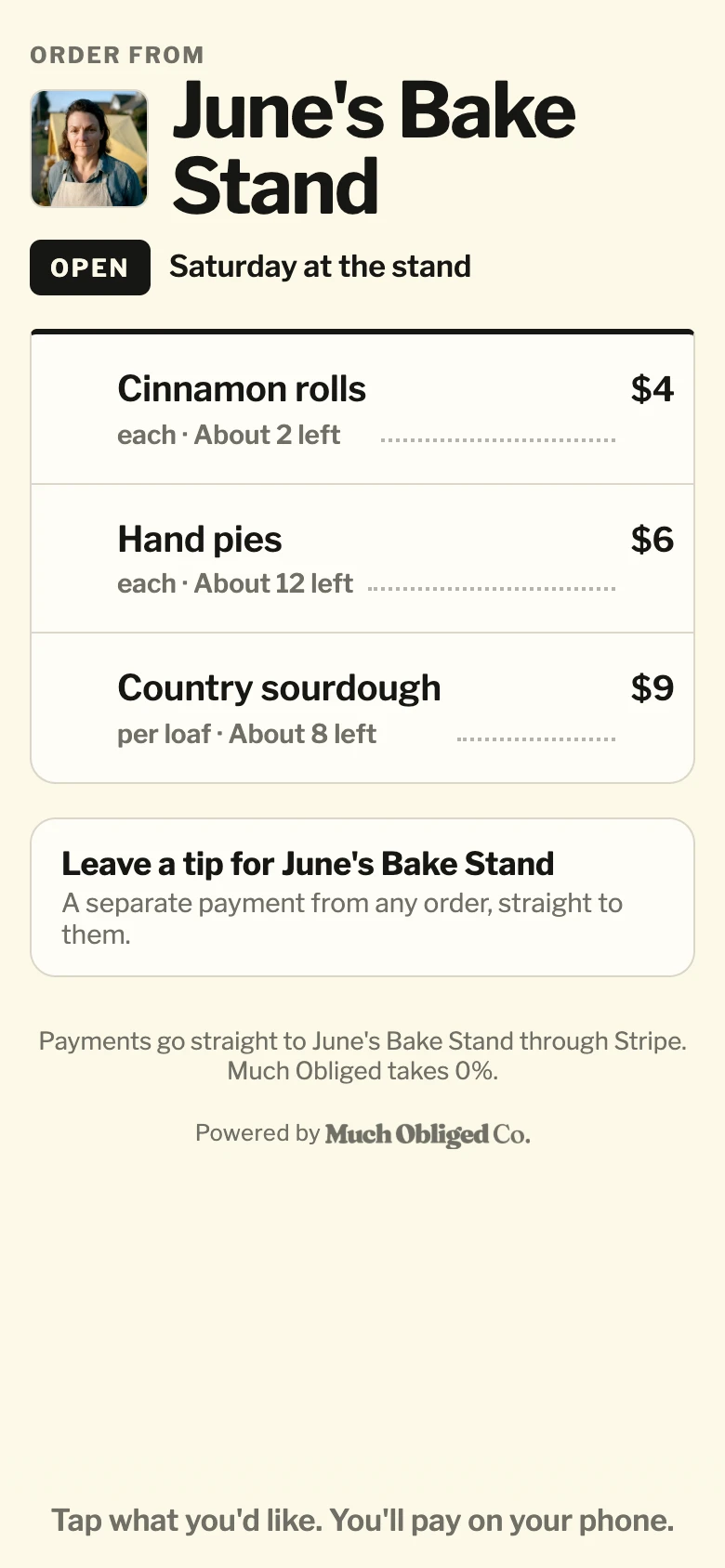
A QR code opened her Much Obliged menu. Customers chose what they wanted, paid on their phones, and took their purchases. As orders came in, the available counts changed.
June went back inside.
She had spent enough years watching things rise. She wasn't about to spend her mornings watching people shop.



Six minutes away lived a woman named Evelyn.
Evelyn loved cinnamon rolls.
Unfortunately, she also loved doing one more thing before leaving the house.
One Saturday, the last cinnamon roll sold at 9:41.
Evelyn arrived at 9:52.
The following Saturday, they sold out at 10:07.
Evelyn arrived at 10:18.
Eleven minutes late.
Again.
June knew nothing about this. She was inside making bread.
Evelyn, meanwhile, was becoming remarkably familiar with the appearance of an empty shelf.
On her third unsuccessful visit, she scanned the QR code.
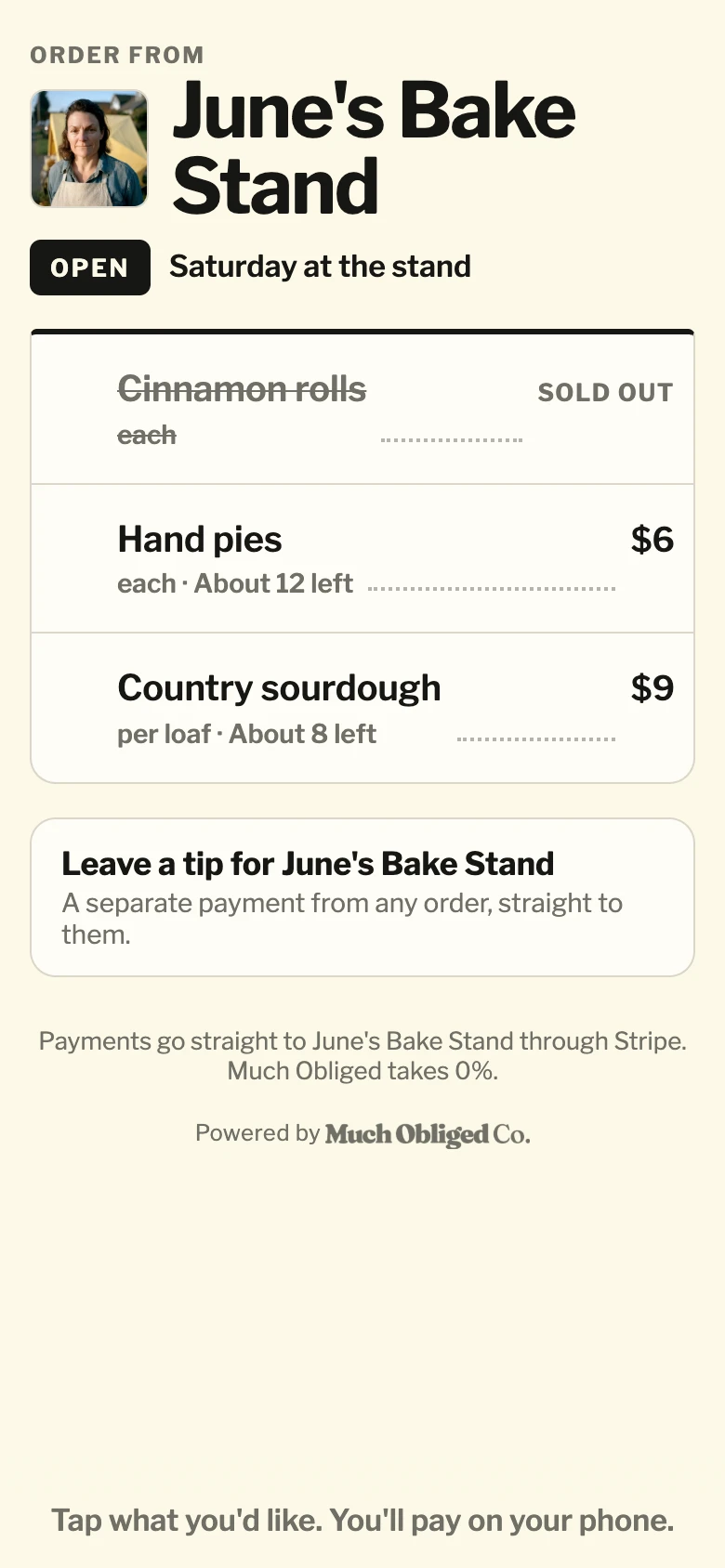
SOLD OUT.
She refreshed the page.
Still sold out.
She refreshed it again, apparently hoping the internet might have a few cinnamon rolls tucked away somewhere.
The menu could track the rolls June had sold. It couldn't bake a twenty-fifth.
We make software, not miracles.
But Evelyn noticed something useful.
She could save the menu link and check it before leaving home.
The following Saturday, she did exactly that.
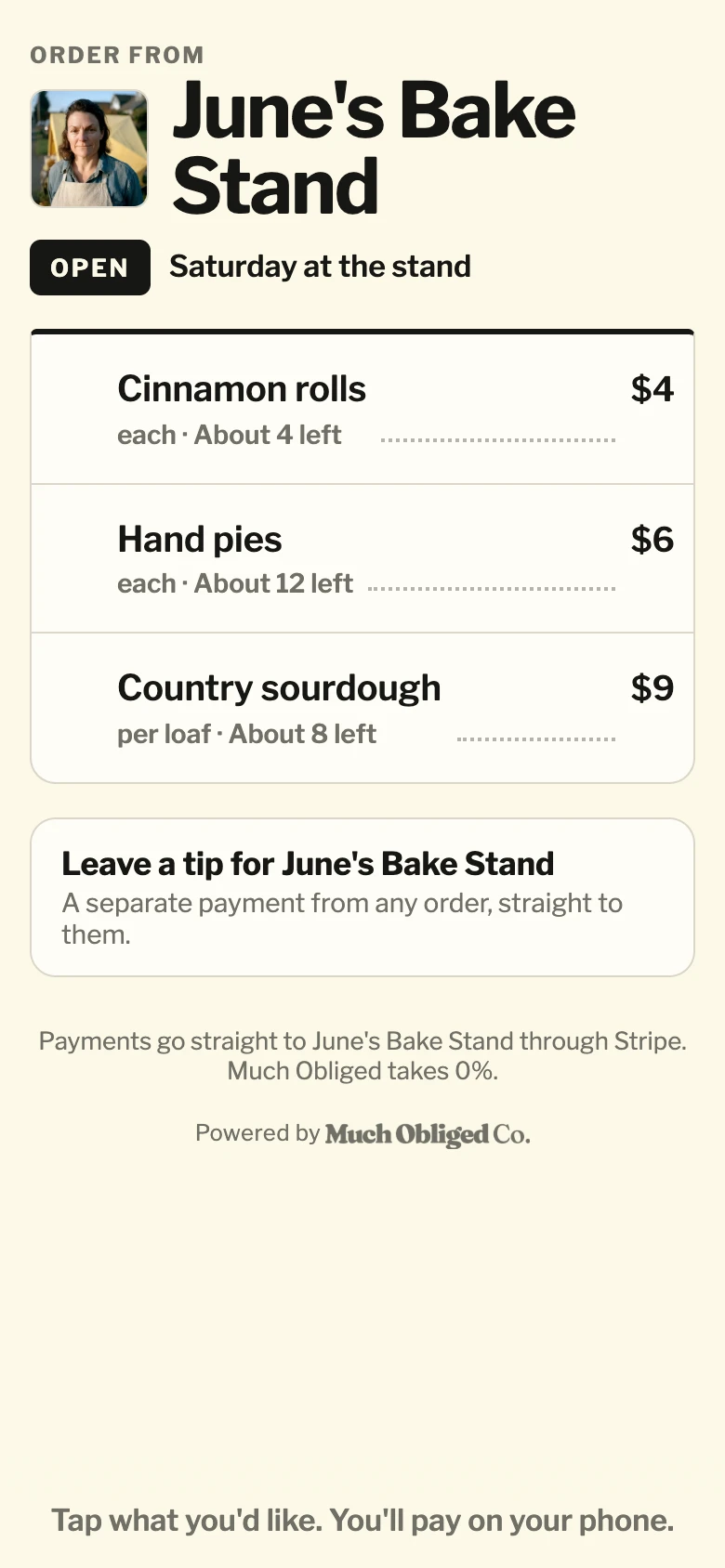
Four cinnamon rolls remaining.
She considered finishing her coffee.
Three remaining.
Evelyn put down the cup.
By the time she reached the shack, two cinnamon rolls were left.
She scanned the QR code, paid on her phone, and took one from the shelf.
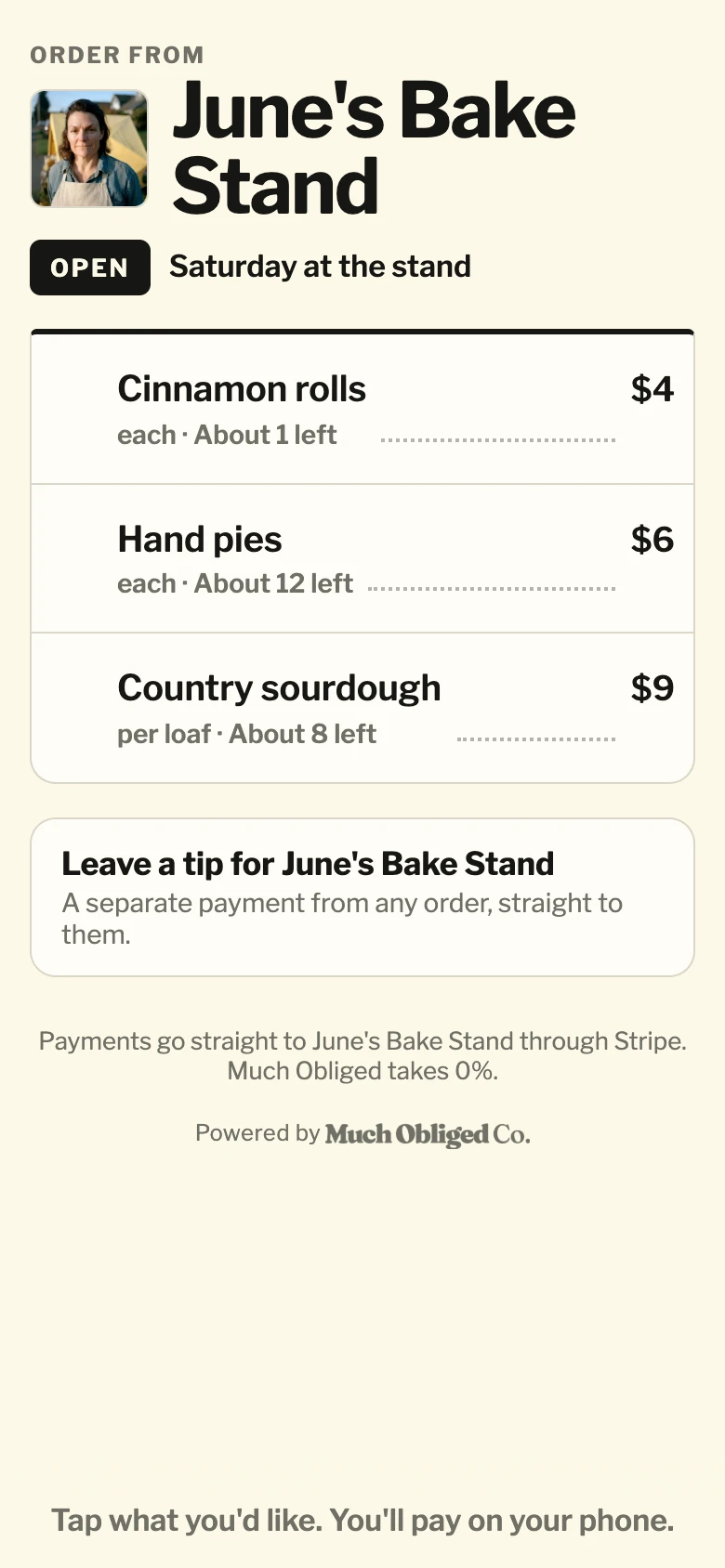
One remained.
Evelyn returned to her car and ate her cinnamon roll.
It was excellent.
Possibly the best she'd ever had.
At 10:06, another customer bought the last cinnamon roll.
The menu showed SOLD OUT.
At 10:17, Evelyn decided she'd like a second.
She stepped out of her car, walked back to the shack, and checked the menu.
SOLD OUT.
She stared at the empty shelf.
She had reduced her journey from six minutes to six feet.
And was still eleven minutes late.
The real screens behind the story
How it worked
The code opens her menu
A customer scans the sign and June's menu opens in the phone's browser: what's for sale today, and about how many are left.
They pay on their own phone
Tap what you'd like, check the slip, and pay on Stripe's secure checkout, straight to June. While they pay, the item is set aside on the menu's count; Stripe's confirmation makes it a sale. No payment was made for these screens.
Where every number comes from
June's Live Menu keeps what Stripe confirmed by card apart from anything she records herself.
A count is June's, not a sale
When June counts the stand, the difference is written down as missing by her count. Only Stripe's confirmations say sold by card.
Count entered by June, not a payment
Sold out
When the count reaches zero, the menu says so. It can't hold a roll on the shelf, and it can't bake a twenty-fifth.
Count entered by June, not a payment
What June used
Let the stand sell while you bake.
Scan to Pay sign
One printed code on the stand opens the menu: Take what you'd like · Scan and pay on your phone · Or leave cash in the box.
The menu
What's for sale today, and about how many are left. Payments go straight to the seller through Stripe; Much Obliged takes 0%.
Live Menu
Card sales update the counts live; cash sales update them when the stand is checked. Count what's left, add more, or correct with a reason.
What it can't do: It doesn't watch the shelf - anyone can take a roll without scanning - and it can't hold a roll on the shelf for anyone. It couldn't bake a twenty-fifth, either.
$8 a month, with a 0% Much Obliged platform fee. You can start with a free page, and add the paid tools when you're ready to accept support, sell, or manage paid work. Standard payment-processing fees are separate.